
5,300-year-old ‘bow drill’ rewrites story of ancient Egyptian tools
A new study reveals that Egyptians were using a mechanically sophisticated drilling tool far earlier than previously suggested.
29 April 2026
Researchers at Newcastle University, and the Academy of Fine Arts, Vienna, have re-examined a small copper-alloy object excavated a century ago from a cemetery at Badari in Upper Egypt, and concluded it is the earliest identified rotary metal drill from ancient Egypt, dating to the Predynastic period (late 4th millennium BCE), before the first pharaohs ruled.
The research, which is published in the journal Egypt and the Levant, also described six coils of an extremely fragile leather thong, which the researchers argue is a remnant of the bowstring used to power a bow drill, an ancient equivalent of a hand drill, where a string wrapped around a shaft is moved back and forth by a bow to spin the drill rapidly.
Dr Martin Odler, Visiting Fellow in Newcastle University’s School of History, Classics and Archaeology and lead author, explains: “The ancient Egyptians are famous for stone temples, painted tombs, and dazzling jewellery, but behind those achievements lay practical, everyday technologies that rarely survive in the archaeological record. One of the most important was the drill: a tool used to pierce wood, stone, and beads, enabling everything from furniture-making to ornament production.
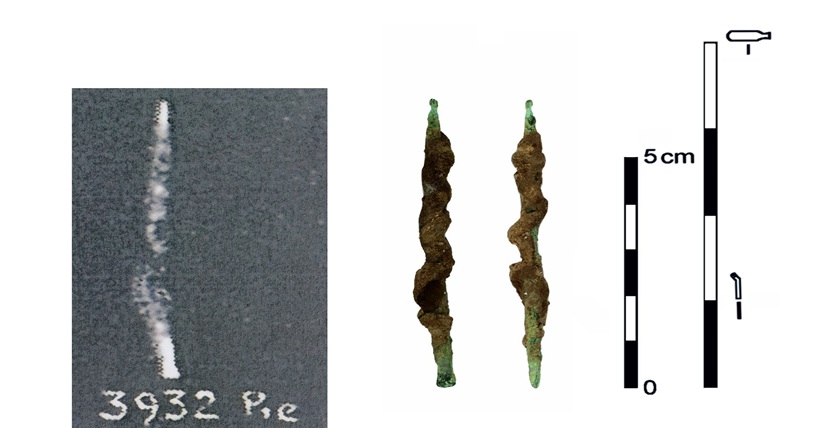
Image: Original photograph of the artefact published in 1927 by Guy Brunton (left) and the actual artefact, photo by Martin Odler
This re-analysis suggests that Egyptian craftspeople mastered reliable rotary drilling more than two millennia before some of the best-preserved drill sets.