
Goldrill Beck
Restoring rivers can slow flows and boost opportunities for wildlife
Published on: 1 May 2026
A major river restoration project in Cumbria has shown that reconnecting rivers to their floodplains can slow the movement of water and improve habitats.
Research led by Newcastle University and the National Trust found that restoring a straightened, engineered channel to a more natural form significantly delayed the movement of flood waters downstream. On average, flood waves took 25 minutes longer to travel through the 1.5 km long restored reach compared to pre-restoration conditions, with a maximum time of 90 minutes.
The findings provide new, real-world evidence for the benefits - and limits - of nature-based solutions for flood management.
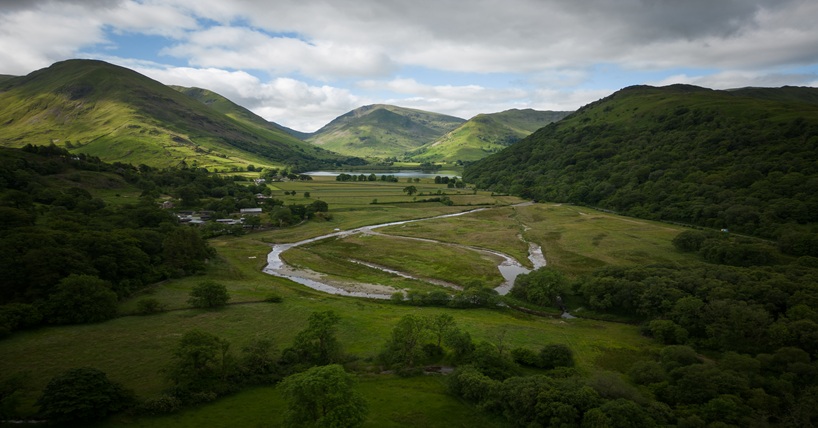
At Goldrill Beck, near Ullswater, a 1.5 km stretch of river was re-meandered and reconnected to its floodplain, as part of a project led by the National Trust. The goal was to slow water flow, store more water temporarily, improve habitats, protect infrastructure and reduce flood risk downstream.
Slowing water, increasing storage
A study carried out after the river had been restored to a more natural form found that the connection to the floodplain improved, allowing water to spill out of the channel more naturally and be stored on the fields. This connection resulted in downstream flood peaks being delayed and water storage within the channel and floodplain increasing.
Expanding the river's area by almost 50% created greater opportunities for wildlife and increased the diversity of flow conditions across the restored area. These changes create a wider range of habitats for fish, invertebrates and plants, supporting biodiversity and ecosystem health.
However, the research, published in Water Resources Research, also highlighted that the changes would have limited impact during the largest floods.
The restored river showed little evidence of reducing maximum flood peaks during the largest flood events. This limited effectiveness during extreme events in steeper landscapes like this is because water can move quickly across the floodplain - regardless of the changes made to the river channel. In these conditions, even a restored river has limited ability to reduce and delay peak flows.
Dr Matthew Perks, Senior Lecturer in Physical Geography, Newcastle University, and lead researcher on the project, commented: “Our research has demonstrated how realigning an embanked stream and reconnecting it to its natural floodplain can slow the movement of flows downstream, whilst bringing a range of ecosystems benefits. However, more research is needed to understand how restoration schemes such as this can reduce and slow down the biggest floods.”
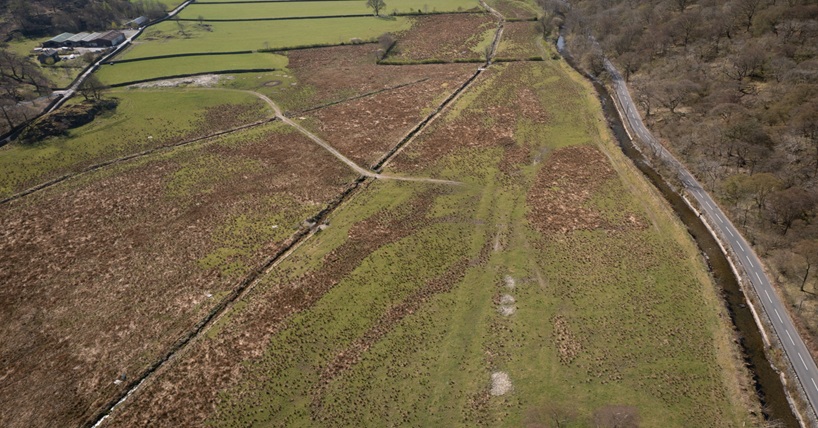
Rebecca Powell, Restore Nature Project Manager at National Trust, said: “The Goldrill Beck project was designed to reduce flood risk to nearby road infrastructure while restoring the river and its floodplain habitat. From the outset, we aimed to let natural processes shape the restored reach—helping to store water and slow peak flows downstream. Through our partnership with Newcastle University and comprehensive monitoring, we’re delighted to see clear evidence that these benefits have been achieved. While projects like this alone cannot eliminate the risk of major flood events, scaling this approach across the landscape can significantly strengthen resilience for both communities and nature.”
The researchers suggest that where opportunities for reverting the historical straightening of river channels exist, realignment and restoration can form an important part of a wider strategy working alongside other land management approaches and upstream water storage.
The research focused on the analysis of hydrological monitoring data collected from 2018 to 2023 and was supplemented with hydraulic modelling. The findings contribute to a growing body of evidence on the role of nature-based solutions in modifying river processes.
Reference: ‘Hydraulic Effects of Channel Realignment and Floodplain Reconnection in a Headwater Stream’ M. T. Perks et al. Water Resources Research, DOI: 10.1029/2025WR041858